31
Jan 11

January Post (for the sake of it)

Unfortunately still not a ton to report, but wanted to at least make a post for the month of January.

I did play around with the new heading sensor, and discovered I'm going to have to pour a little (well, maybe a lot) more money into it. The sensor I have now will only report accurately when perfectly level. I will need to get a variation of this product that has tilt compensation (unless I care to save a few bucks and try to reinvent it with cheaper parts - no thanks!). I'm a little annoyed at myself for not coming to this realization sooner as there are some video tutorials that are quick to point out this limitation of the cheaper sensor. Oh well! I still can find a good use for the sensor I already have.

I have also made a tiny bit of progress on the hull deck lids, but not worthy of going through the trouble to post a new picture just yet.

More to come...

30
Dec 10

ArduPilot Mega Procured!

Yay! The backordered ArduPilot Mega has arrived! I also have picked up one of the heading sensors.

Progress has been very slow this past month. In fact, I haven't done much since about mid-November other than obtain a few electronics parts and purchase some rip-stop nylon for the sails. I did manage to rig up the rudder servo (video of it has been posted on the Hardware section, and can also be seen here). You can see some very minor progress on the hull lids in the video as well.

I don't plan to do much with the microcontroller just yet as I really want to finish the first stage of getting the boat out in the water. More progress to come...

8
Nov 10

Camera Fun

I've been trying to stay focused on the first stage (glorified R/C sailboat), but did let myself get a little sidetracked with some camera hardware...

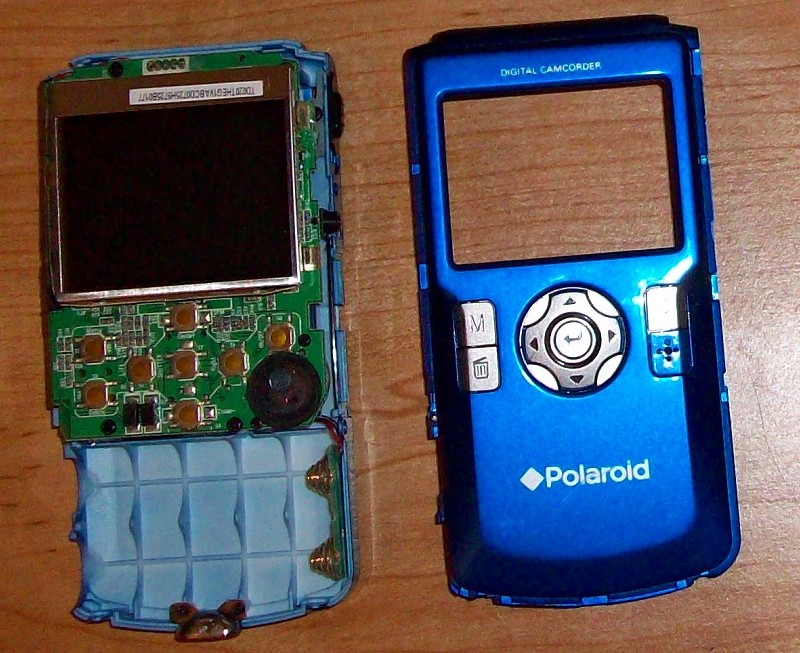
I found some very inexpensive cameras at Fry's Electronics that were perfect for this project. The Polaroid DVG-130 is a 1.3 megapixel camera and video recorder that writes to SD card that only cost me $18.05 each!

After much experimentation, I finally got both cameras wired up and able to be controlled via IO pins (so far, I've been testing using a TI Launchpad - another bargain at $4.30!)

I've updated the Hardware section with some pictures and a video demonstrating the automation of the camera controls.

In other news, I'm finally back to focusing on getting the rudder servo installed. Once that has been done, I can create the lid/deck which will seal the boat up. I expect the lid to take a little bit of time since it needs to be fairly precise to keep the water out (of course I will be taking advantage of lots of rubber weatherstripping and the like to keep the water out).

That's it for now..

15
Oct 10

Old storage box full of RC parts for the WIN!

I don't need to buy a radio now, because I came across an old box in storage that had a bunch of my old RC stuff in it... One of the items in it was a 4 channel radio/receiver in good, working condition. Take THAT $120+ I would have had to spend!

...Which is good news because I think I need to spend about $50 just for a free rotation potentiometer to make my wind-vane work. I came across this one here which was actually recommended in another autonomous sailboat forum I came across.

Also, I came across another group of autonomous sail-boaters and a competition called WRSC.

And then there's this guy/group... They're planning to circumnavigate the planet with theirs!! And I thought it was ambitious to go to Catalina round-trip... Though they mention the plan is to use a 16 foot hull for that endeavor, and their current hull is 8 feet. Maybe my 5 footer will be the little robot boat that could. 😀

5
Oct 10

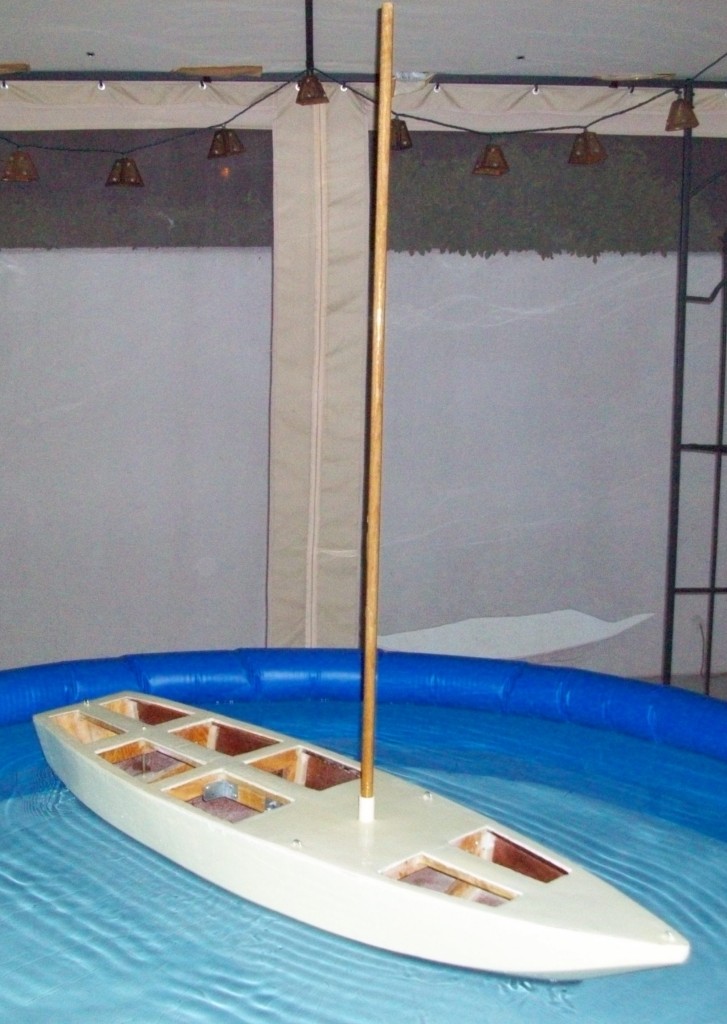
First float test results... It floats!

The fiberglass work is basically done.. at least, the boat is watertight at this point. I do need to work a little more on smoothing out the finish, final paint, etc. I also am still working out the details of the deck lid(s) to conceal the boat contents (i.e. electronics and power) water-tight.

I recently came across a similar project, the ( Pinta ), and decided their design is superior to mine, but I am pressing forward for now with what I've started.

Here are some reasons I like the Pinta's design:

    1. Hull appears to be completely sealed, with all electronics in a simple, water-tight box.
    2. Rudder hinge is more elegant than the brass tubing/shaft approach I went with.
    3. Boat hull is longer. Not sure of exact dimensions, but it looks to be at least 8 feet long which will handle rough ocean much better than Serenity's 5 foot hull length. Then again, I don't have/want a boat trailer, so I am pretty happy with the length I chose for now... until a shark swallows mine. 😐

Anyways, my morale was boosted when I finally put the hull in some water for the very first float test and found it to be extremely stable, even without the keel! It also sits as high as could be hoped for in the water. I had feared it might sit too low because the hull is getting quite heavy now (haven't weighed it yet, but I'd guess easily 30+ pounds).

The next step is to water test with the keel to determine the appropriate keel weight to make it virtually impossible for the boat to capsize. This will amount to temporarily duct-taping different lead weights to the keel and trying to get it to tip.. very scientific process, I know. 🙂

A picture was added to the Sailboat page.

It Floats!

25
Aug 10

Fiber glassing coming along

The hull bottom has been fiber glassed and painted. It needs another coat of resin and then I can focus on finishing up the top side, which will not require fiberglass (only resin and paint).

I can order the radio any time now... I am debating between 2 and 3 channels. 2 channel radios are very cheap (which I'm in favor of) but 3 channels is looking like a better minimum as I am seriously considering adding a servo for adjusting the main sheet. It could become necessary to have this feature for the boat to make any kind of progress on certain headings in extreme winds. (1 channel for autopilot/remote control override switch, 1 channel for rudder, and possibly 1 channel for main sheet adjustment) The boat itself may have more servos than RC channels, but they will not need to be accessed from the remote control. For example, there will be at least one servo mounted camera controlled by the software.

Also, I realized a new condition I need to handle in the software.. the case where a way point can not be reached for some reason. (i.e. imagine an oil tanker parked on one of the way points!)

Additionally, the boat should probably handle / check for depths that are too shallow. While this case should be extremely unlikely (carefully placed way points should prevent this), it's certainly possible to have regions where rocks or kelp make for problematic passage (or even big fish!). Obviously this can be a later addition/lower priority for now.

No new pictures this time that I want to share just yet... next update will have significant changes to show. I did make some edits to the Design Goals page.

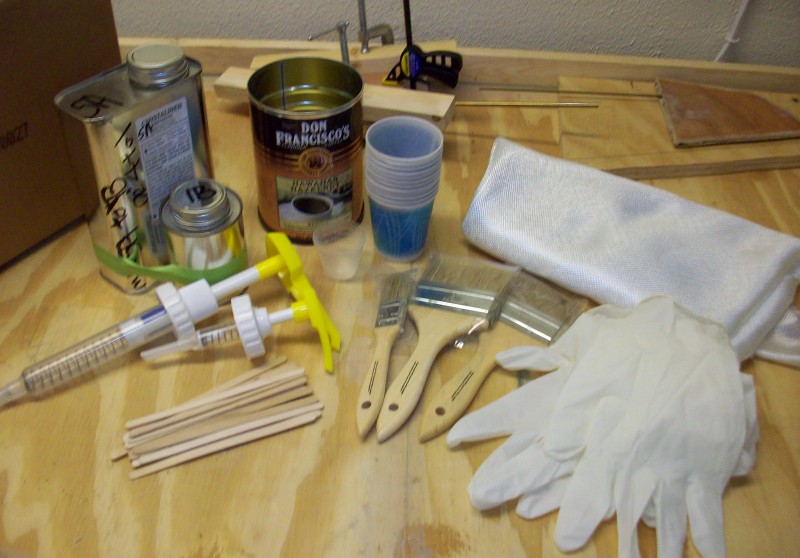
Fiberglass Kit compliments of my Dad!

9
Aug 10

Mast & Keel mounts complete, ready to water seal!

Progress has been steady even though I didn't get a chance to post an update last week, and am a day behind for this week... (I try to post updates every Sunday night)

The mast and keel mount design/implementation is finally completed. I also re-installed rudder tubing because the previous tubing was deemed too narrow for the job. The rudder I had made with the previous diameter brass rod flexed under it's own weight - which did NOT seem good. I am using much thicker brass now and almost have finished the new rudder.

Unfortunately I have not yet ordered my radio & servos. This is more intentional than me being behind schedule. Even though it's not a terribly large purchase, I'm trying to keep expenses to a minimum until my finances can justify it (which, with any luck, is looking to be sooner than later)

I will definitely be able to begin water proofing the inside of the hull within the next few days thanks to a really nice kit my Dad put together with everything needed to work with epoxy resin and fiberglass (see picture in sailboat page).

The progress doesn't look too impressive, but I am happy with what has been accomplished these past two weeks given the brief moments of time I get to work on it. 😉

Several new images were added to the Sailboat page showing the progress, and the awesome 'fiberglass kit' compliments of my Dad! 🙂

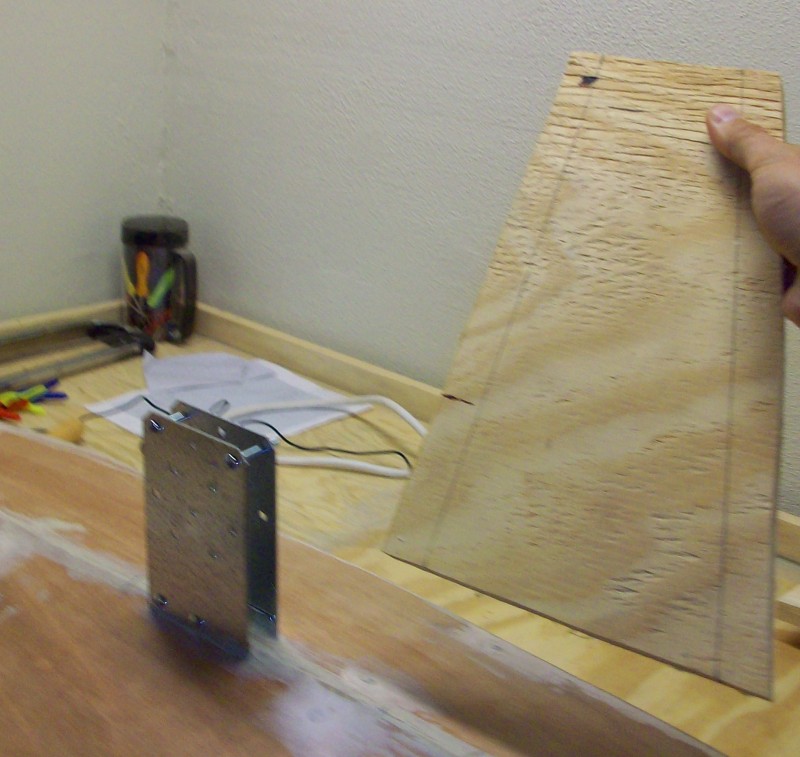
Mast mount

Keel mount

25
Jul 10

More boat hull progress and a boat stand

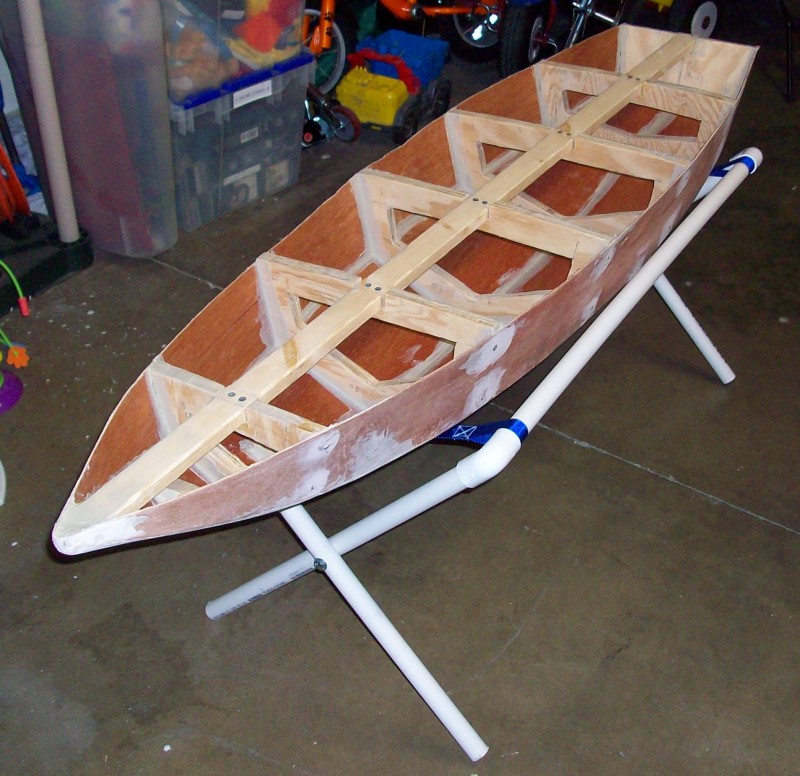
More progress on the boat hull.. Siding is now on, and a lot of ugly patching was added (which will be painted over). I also made a simple boat stand with some PVC pipe and nylon straps. I'm quite proud of my work with Lizzy's sewing machine on the straps! I also added the brass tubing that runs from the deck to the bottom of the hull for the rudder. (not shown in picture).

The next steps are:

  • 1. Order a radio (should have done this last week!) so I can prep the mounting for the rudder servo.
  • 2. Finish up the keel mount (either build something custom OR going to use a surfboard fin box)
  • 3. Determine/implement how mast will be mounted, including hardware, wire (or thin line), etc for the 'fore-, aft- and side- stays'. (Been taking a sailing class and proud to use my geeky sailing terms) 😛 Basically those are the lines that help support the mast.
  • 4. Coat the inside of the hull with epoxy (so that I can quickly move on to adding the deck sheeting)
  • A new image was added to the Sailboat page showing the boat with it's siding and the new boat stand.

    Hull and Stand

    18
    Jul 10

    Progress on the boat hull

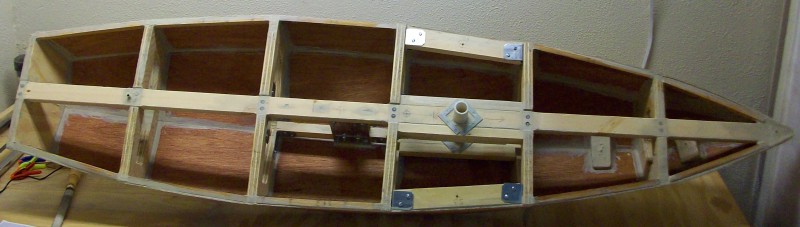
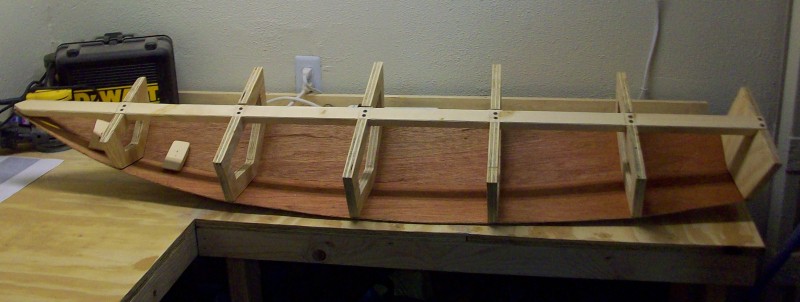
    A bit more progress on the hull was made this week. The bulkheads are all cut out, and the first of the siding has been attached (the bottom 'skin'). Luckily the thin siding wood cuts very easily with the jigsaw. The main challenge was to come up with the template for the skin since it is a curved surface. I ended up taping newspaper to the bulkheads, and using masking tape to trace the edges for the templates. I then removed it from the bulkheads and traced it out onto the siding wood. Images and basic specs were added to the Sailboat page.

    Bulkeads and bottom skin

    11
    Jul 10

    Sailboat page updated with images & video

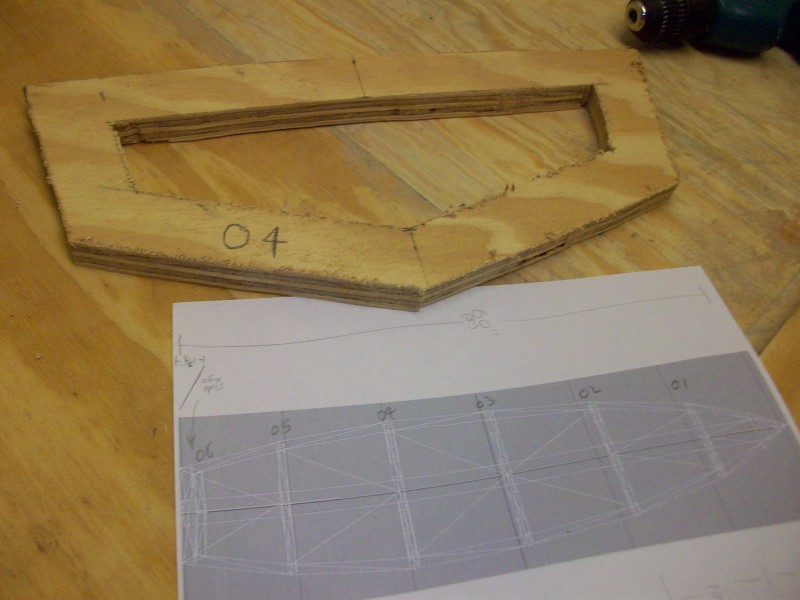
    A few images and a video were added to the Sailboat page. Worth noting: cutting 3/4 inch plywood with a cheap jigsaw is a lot more work than I remember. I had planned to cut all the pieces out tonight but decided to take a break after only cutting 2 out of 6. :O

    Bulkheads